
Audio logos, jingles and sonic branding: what’s the difference?
Sonic branding is the wider use of sound to give a brand a recognizable identity. It can include music for advertising, a voice style and sounds inside a product. An audio logo is one repeatable signature within that system. A jingle is a short advertising song, usually carrying a name or slogan. Its melody can become a compact audio logo: Listen points to McDonald’s and State Farm as examples.[2]
Four ways an audio logo can work
- Melody: a small sequence of notes, such as Intel, NBC or T-Mobile, gives the listener something to hum.
- Texture: Netflix’s percussive ta-dum builds its identity through the weight and character of the sound.
- Product sound: a cue heard during everyday use can also identify the brand in advertising. Listen cites Chromebook startup and Google Assistant sounds.
- Voice: a spoken name or phrase makes the identity explicit, as in EA Sports or a producer tag.
The first three approaches follow Listen’s design categories; voice can overlap with any of them. A product cue may need a fuller arrangement for an ad, while a melody can keep its notes and change instruments to suit different moods.[2]
Can an audio logo be a trademark?
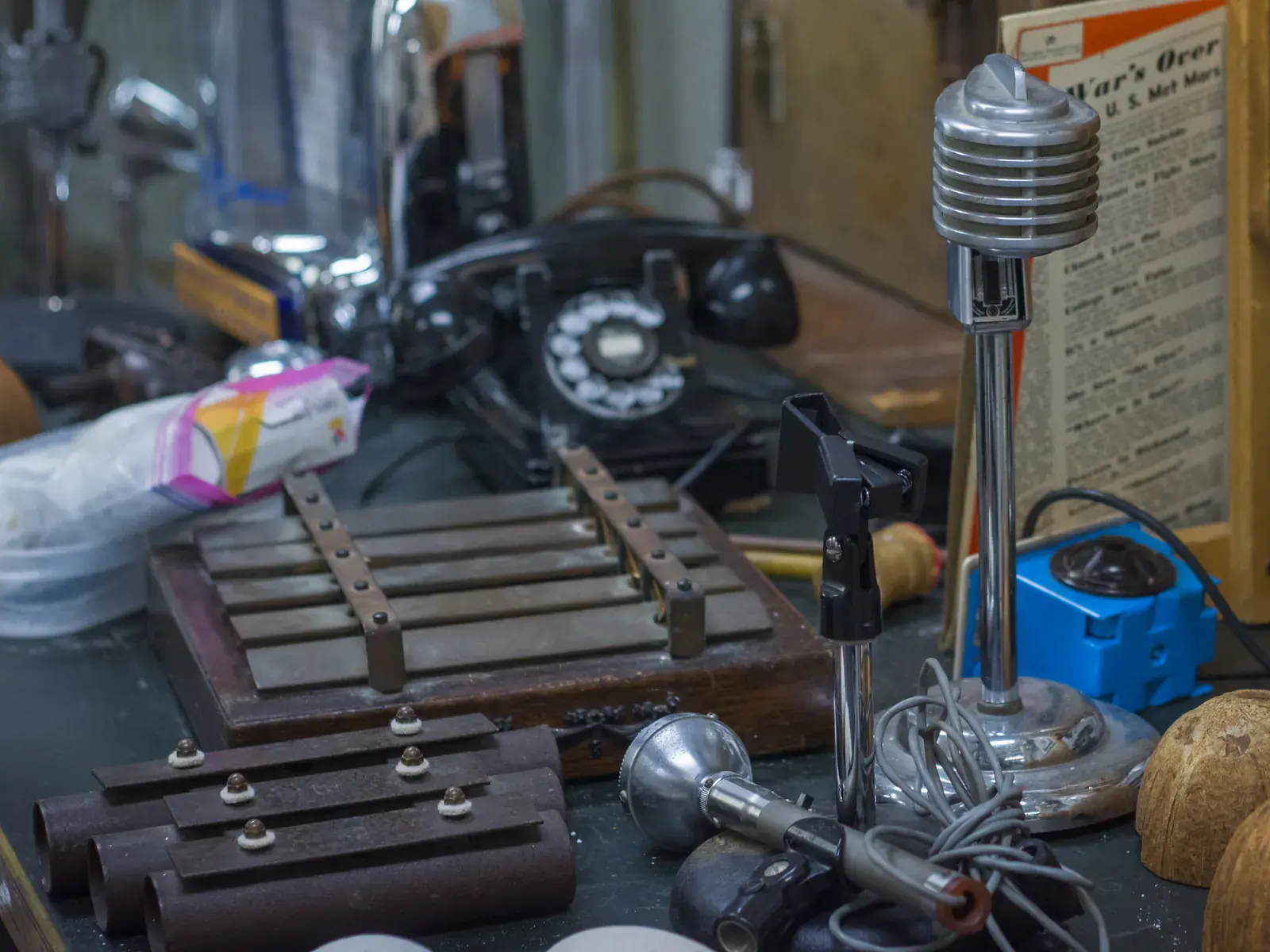
An audio logo describes a branding asset; a sound mark describes its trademark role. The U.S. trademark examiners’ manual says: “A sound mark identifies and distinguishes a product or service through audio rather than visual means.” Distinctive sounds and commonplace product noises face different requirements. A familiar noise, such as an alarm clock ringing, needs evidence that listeners associate it with a particular source. Creating an audio logo does not automatically register it as a trademark.[3]
The Patent and Trademark Office keeps a page of examples. First on the list are the NBC chimes (play: The NBC chimes, 1933 recording (NBC Chimes Museum)), three notes, followed by entries including MGM’s roaring lion, Intel’s chimes, Lucasfilm’s THX logo theme, AOL’s “You’ve got mail” and the Pillsbury Doughboy’s giggle.[4]
Even the oldest of them has a fuzzy birthday. NBC’s own records disagree about when its G-E-C chimes first went out over the network: a 1947 trademark filing says 1927, a 1939 telegram guesses 1928 and a library note says 1929. In 1950 the network announced that the chimes had been registered as a trademark.[5]
Intel: a melody built from a slogan
Werzowa told Twenty Thousand Hertz that studying Mozart and Beatles scores did not solve the brief. The four syllables of Intel Inside did: they suggested four evenly spaced notes. He used fourths and fifths for the melody, aiming for intervals that would travel across cultures, then added an opening tone to prepare the listener’s ear.[1]
He also mixed wooden instruments into the electronic sound to suggest human control of the technology. The useful lesson is how specific the choices were: rhythm followed the slogan, while instrument texture supplied warmth.[1]
Writing a mnemonic is inventing audio which works for a very specific task.
Netflix: two knocks and a guitar played backward
Netflix’s sound arrived in 2015. Todd Yellin, who led the search, told Twenty Thousand Hertz that it had to be brief enough for viewers who wanted to click and watch. He ruled out a spoken brand name and anything resembling a computer or game console starting up.[6]
Lon Bender’s team tried several directions, including a version with a goat. In blind audience feedback, the eventual winner strongly suggested movies. Yellin’s daughter also picked it from the finalists.[6]
The knocks began with Bender tapping his wedding ring against a bedroom cabinet, layered with a slowed anvil and muted hits. The tonal swell came from Charlie Campagna’s old recording of reversed, processed electric guitar. Together, the impact and swelling tail made a signature without an obvious instrument or sung name.[6]
THX: start with chaos
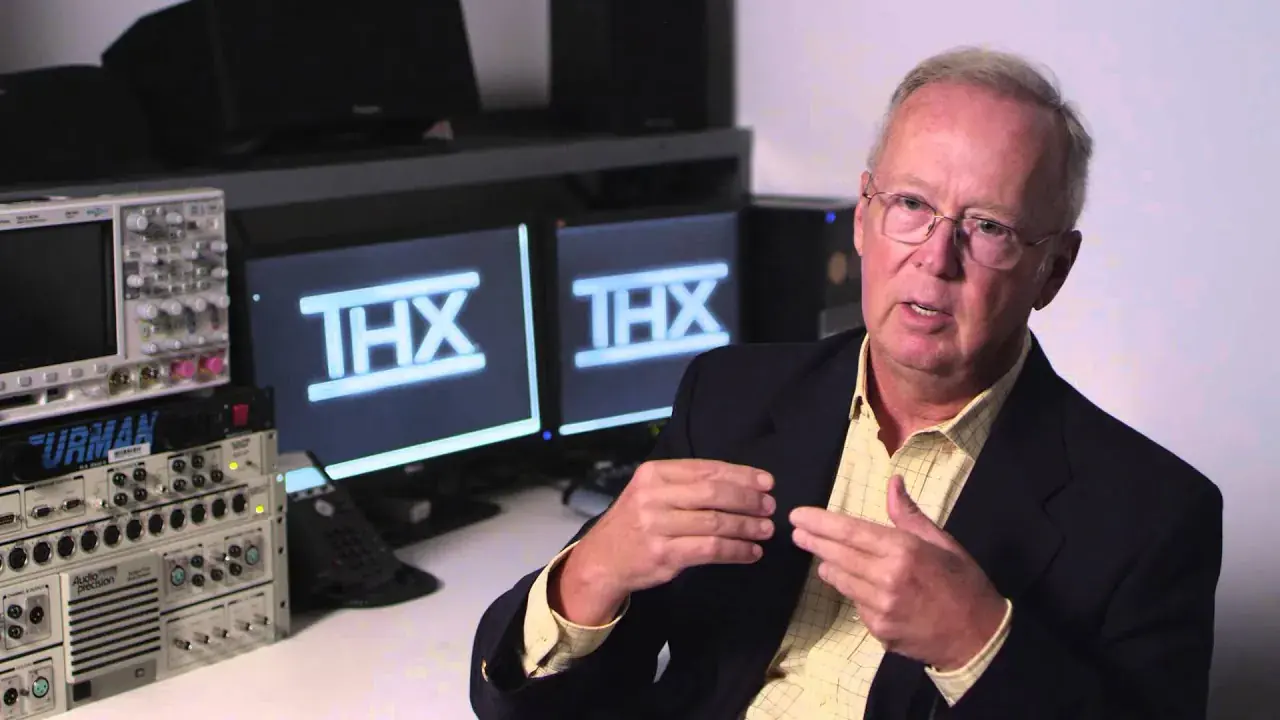
The THX Deep Note (play: THX “Eclipse” Deep Note trailer, 2015) shows why duration depends on context. Made for a cinema introduction, it has time to build. Lucasfilm researcher Andy Moorer told Twenty Thousand Hertz that he wanted an unsettled opening to resolve into a large, organ-like chord. That transition also lets an audience hear the theater’s sound system at work.[7]
Moorer wrote a program to generate the moving voices and steer them toward the final harmony. He described completing the task in four days. The design makes its point through the movement from instability to resolution.[7]
In a follow-up interview, Moorer said the original stereo version used 30 voices. He also recalled that the first recording was lost. Because the program used random values, rerunning it produced different results; the team generated takes until one was close enough. The familiar original was itself a remake.[8]
Nokia: a tune in every pocket
Not every audio logo was written for the job. The Nokia tune is four bars, bars 13 to 16, of Gran Vals, a solo guitar piece the Spanish composer Francisco Tárrega wrote in 1902. Nokia’s phones played it as a tinny monophonic chime (play: The Nokia tune, monophonic version (Nokia 3310)) at first, then on piano in 2004 and on guitar in 2008, and by one 2009 estimate it was heard 1.8 billion times a day.[9]
It counts as a sound mark, too: the Patent and Trademark Office’s list includes a Nokia entry for “guitar musical notes.”[4] A ringtone plays the brand to everyone in the room, whether or not they own the phone.
Apple: a product sound becomes an identity
Envato includes the Mac startup chime among its sonic branding examples. It illustrates a different route to familiarity: the sound accompanies using the product itself, rather than appearing only in an ad.[10] Apple documents that whether it plays depends on the Mac and macOS version, and that users can switch it off in supported versions.[11]
That suggests a useful design question: where would a sound naturally belong in your customer’s experience? A startup, confirmation or sign-off gives it a reason to be heard. Also plan for muted playback, so the visual message still makes sense on its own.
PlayStation: a startup sound with a job to do
The original PlayStation startup sound (play: Original PlayStation startup sequence (fan recording)) was designed by Takafumi Fujisawa in spring 1994. In an interview published by PlayStation, he said it had to preserve the console’s identity across many kinds of TV speaker while fitting into a small amount of ROM. He wanted the anticipation of entering a cinema.[12]
It also communicated system status: the sequence told players that the hardware was working and the disc had been read. A reverse swoosh could loop if the disc failed to read. Fujisawa even tried a version with his own voice whispering PlayStation, but the team chose the version without it.[12]
The practical lesson is to design for the actual playback system. A sound that depends on deep bass may lose its identity on small speakers. PlayStation also shows how a functional cue can set an emotional expectation before the experience begins.
For a comparison with streaming brands, amp’s analysis places PlayStation alongside Tubi, HBO and Apple TV+. Its agency ratings are useful context, rather than evidence that one style will suit every audience.[13]
When the logo is a voice
A spoken signature can identify its owner from the first encounter. The USPTO’s examples include AOL’s “You’ve got mail,” Moviefone’s greeting and the Aflac duck quacking its own name.[4]
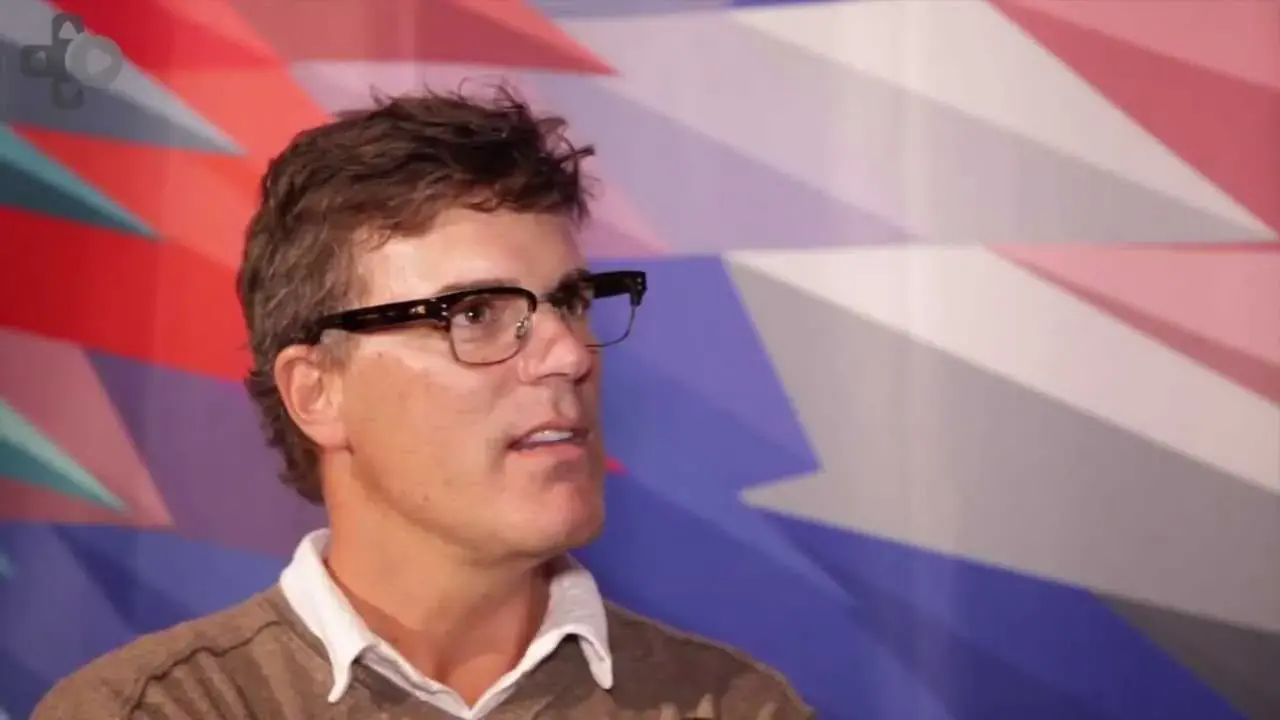
EA’s sports games open with a spoken logo, “EA Sports, it’s in the game,” (play: EA Sports intros, 1993–2016 (fan compilation)) in the voice of Andrew Anthony, who discusses the recording in this Shacknews interview. The line combines a name with a claim about the product. Its delivery supplies a recognizable rhythm without needing a sung melody.[14]
EA’s other label had a line of its own: on games such as Need for Speed: Underground, the EA Games intro ended on “Challenge everything.” (play: EA Games intro, Need for Speed: Underground)[15]
Carmakers sign off the same way. From 2007, Volkswagen signed its advertising “Das Auto,” (play: Volkswagen’s “Das Auto” sign-off) the car. In December 2015, after the emissions-test scandal, it dropped the line for the plain word “Volkswagen”; the slogan had been signed off by Martin Winterkorn, the chief executive forced out over the scandal.[16]
A spoken producer tag applies the same idea to a beatmaker’s name. It does the job Werzowa’s melody does for Intel, in the few seconds before a beat drops, and it travels the same way, by repetition. Our history of the producer tag traces how hip-hop producers developed their signatures, and our guide to tags, drops and voice tags sorts out the names. VoiceTagGods, which publishes this blog, records spoken tags for producers and brands; its vocalists are here.
How to plan and test your own audio logo
Use these examples to write a brief before commissioning or recording anything. These are practical checks you can perform, not a claim that every brand needs an audio logo.
Six checks for your audio logo
Choose its job and placement
Decide whether it will open a video, close an ad, identify a podcast or sit before a beat. The available time and surrounding audio should shape the length. A two-second sign-off and a cinema introduction solve different problems.
Describe the character in concrete terms
Ask for a dry spoken name, a warm chord or a sharp percussive hit. Give references for the qualities you mean, then develop a signature of your own.
Try it in contrasting material
Put the same idea against a quiet passage and a busy mix. If you need variations, keep a recognizable feature such as the note sequence, rhythm or spoken delivery.
Check the actual playback
Listen on a phone, laptop and headphones at an ordinary volume. For a producer tag, confirm that every word remains clear inside the beat and that the tail does not mask the next phrase.
Ask listeners useful questions
Start with what they hear and what it suggests before revealing the brief. After repeated exposure, check whether they connect it to your name. Separate reactions to the sound from recognition of the brand; familiarity with Intel or Netflix is not evidence that your new sound will perform the same way.
Confirm the rights and delivery files
Check the permissions for any samples and recorded voices, including whether a stock sound is licensed nonexclusively. Request a clean master and the versions your placements require. Keep the identity consistent long enough for listeners to learn it.
Does your brand need an audio logo?
Start with a recurring place for it to play. A podcast, video series or catalogue of beats gives a signature repeated use. If most customers encounter your brand in silent images or text, an audio logo may have little work to do yet. A consistent voice or music choice may be a more useful first step.
For a producer, a clearly delivered name can be enough. Try it in the tracks where it will actually appear. The goal is a sound people can learn to associate with you, at a length and volume that serves the listening experience.