
That voice belongs to the rapper YG. Mustard lifted it from the end of “I’m Good,” a YG song he was remaking a beat for in the studio YG kept in his bedroom in Inglewood, California. “I didn’t know what I was doing,” Mustard told Billboard News in 2024. He decided to put the line on all his beats anyway.[3]
“Not Like Us” debuted at No. 1 on the Billboard Hot 100, Mustard’s first chart-topper as a producer.[4] Nine months later it won record of the year at the Grammys, and Mustard accompanied Lamar onstage.[5]
Those five words are a producer tag: a short recording, usually a name or a catchphrase, that a producer places in a beat so listeners know whose work they are hearing. Most last a few seconds and sit where nothing else is happening, before the first verse, between sections or at the very end. Tags have served as audible credits and deterrents to unpaid use; some have become hooks of their own.
How that happened is a story about mixtape DJs, $20 beat leases and a Kanye West fashion show, and it doesn’t stop at American rap.
Before the producers, the DJs
Hip-hop’s first stars stood behind the turntables. As the critic Paul Thompson noted in a 2016 history of the tag for Red Bull Music Academy, some of the genre’s early record titles put the DJ’s name up front: Eric B. Is President, The Adventures of Grandmaster Flash on the Wheels of Steel.[6]
DJs also made the first spoken signatures. On the mixtapes that moved through New York in the 1990s, DJs such as Kid Capri and DJ Clue talked over the music, often over exclusive records, to claim the songs and advertise who had them first. The producer and educator Isaac Duarte traces the producer tag back to those drops in his history for Splice.[7]
Producers sometimes did the same. Pete Rock can be heard talking over his 1991 remix of Brand Nubian’s “Slow Down,” saying his own name. But that was a finished record. For most of rap’s first two commercial decades, producers sold beats to artists and A&R executives, not to the public, so there was little reason to stamp a demo.[6]
The empty space at the top of “Oh Boy”
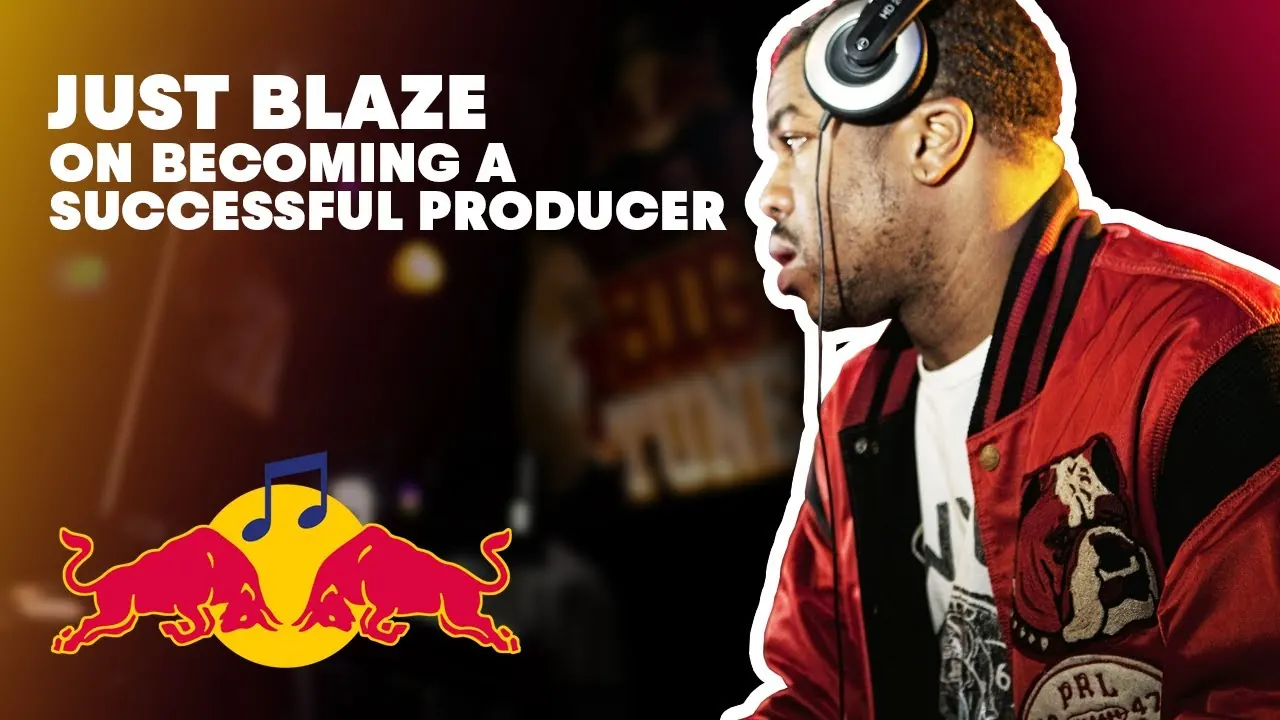
One of the best-documented early tags belongs to Just Blaze, who explained it during a 2006 lecture at the Red Bull Music Academy in Melbourne.[8]
In 2002 he produced “Oh Boy,” Cam’ron’s hit with Juelz Santana. He had asked Cam’ron to say his name on the record (play: Cam’ron, “Oh Boy,” official video), and he noticed a gap right at the top of the song. “Put it right there where there’s nothing else being heard but that,” he remembered thinking. Until then, he said, a name on a record usually had to compete with the beat, an intro or somebody talking. That empty space became the template.[8]
I’m not rapping, I’m not dancing in videos, and I’m not doing ad-libs but I have to do something to kind of brand myself.
It reached people who had never heard of him. Some listeners, he said, assumed “Just Blaze” was a new phrase for smoking weed that rappers had started putting at the beginning of their records.[8]
The deep-voiced version he later used came out of a session for Joe Budden’s “Pump It Up.” (play: Joe Budden, “Pump It Up,” official video) Budden wouldn’t say the producer’s name. Instead he threw back a joke Just Blaze had been making all night about Budden’s song “Focus,” said “Just Blaze” in that same deep voice, and told him to record it that way himself. Just Blaze knew the record would be big, and he’d be “a fool not to have my name at the beginning,” so he did. He told the Melbourne audience he never really liked it. When he tried to drop it, artists asked him to keep it, saying listeners paid more attention when a song opened with his name.[8][6]
Other producers found their own ways in. Jermaine Dupri opened records with So So Def introductions, and Kanye West stepped onto Bump J’s “Move Around” to make sure, in his words, “everybody know who did the track.”[6]
A watermark you can hear
Around the turn of the century, the tag picked up a second job. Aspiring rappers had started buying beats online, mostly on SoundClick, where an exclusive might cost about $150 and a lease, which allowed limited commercial use, as little as $20. Producers dropped their names into the beats they posted, sometimes several times and right in the middle of the hook, to discourage unpaid use.[6]
It didn’t always work. “The obvious answer is find untagged portions of the beat, chop it up, arrange them, and loop it,” Masai Andrews, a rapper and activist from Albany, New York, told RBMA. “I’ve done this before and I’m not proud of it.”[6]
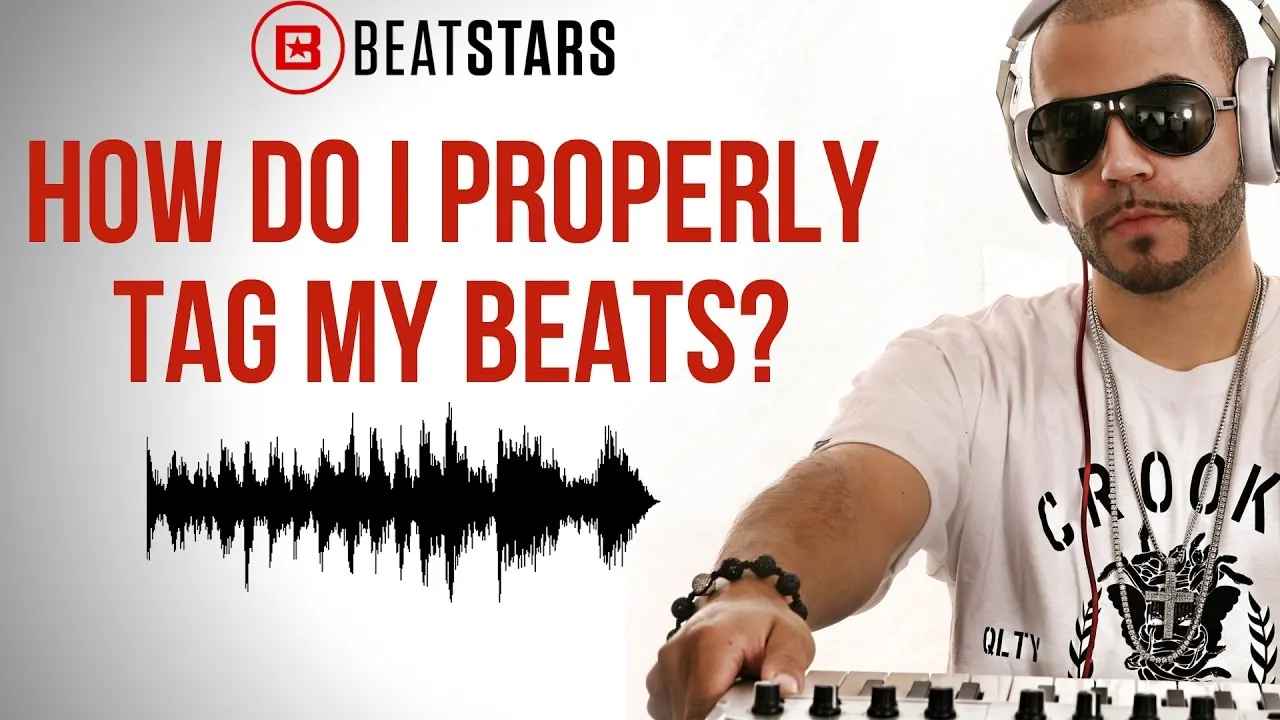
Producers learned to tag for the listener in front of them. In a 2016 video for BeatStars, the producer and educator DJ Pain 1 said he tags beats sent straight to artists only at the beginning, “sometimes maybe at the end,” because professionals won’t write demos over a constant tag. The cheap beats he sells online carry tags throughout, and rappers still ripped them from YouTube and emailed him for feedback. “To me that’s like stealing my TV and then inviting me over for movie night,” he said.[9]
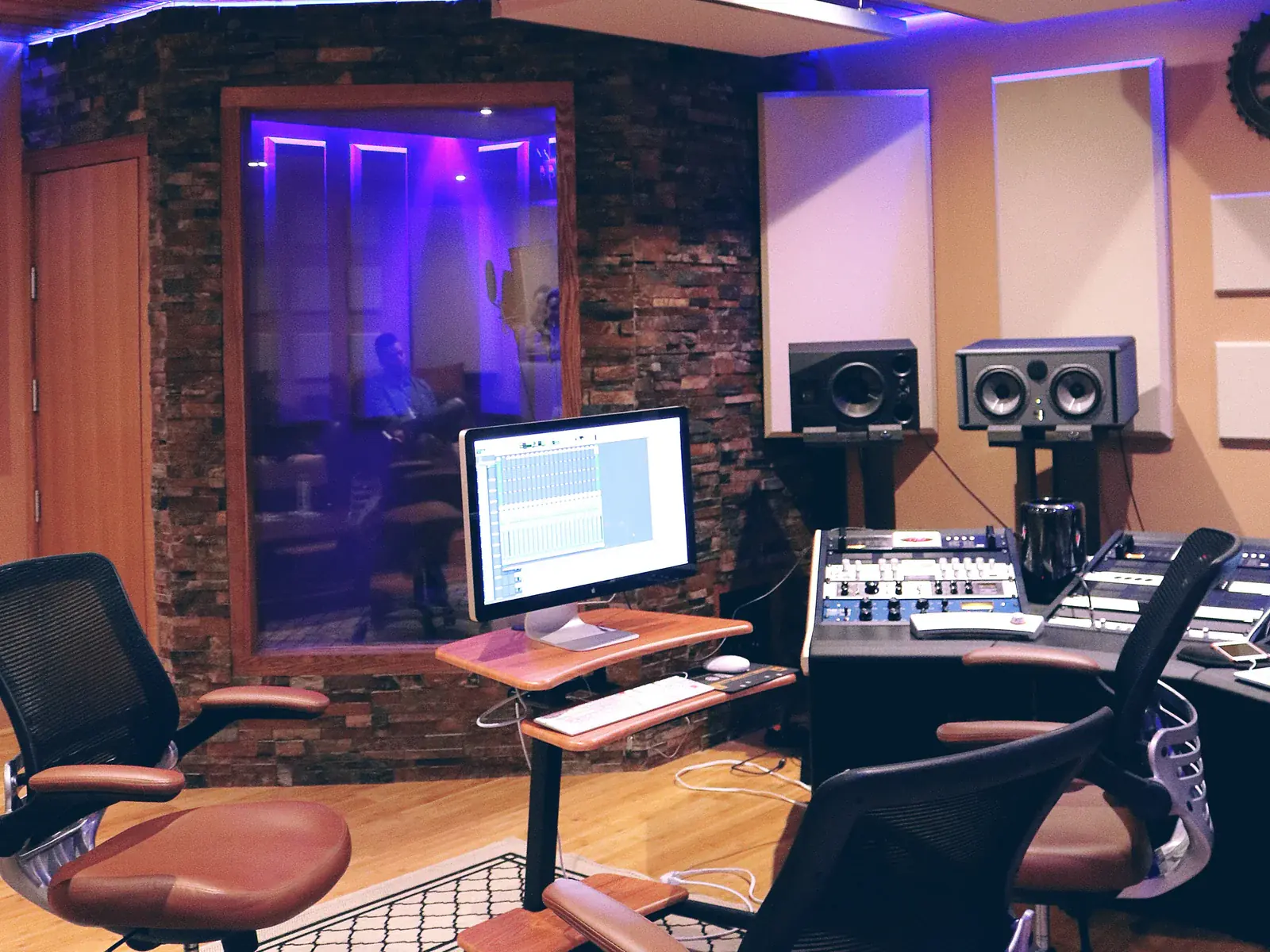
The watermark survived, and today it is built into the marketplaces. BeatStars lets producers attach a voice tag to the previews they upload[10] and choose whether free downloads arrive tagged or clean.[11]
The tag also covered a bigger gap: credit. Spotify didn’t show producer credits until February 2018, and then only on desktop, using record-label metadata that the company warned might be incomplete.[12] A name inside the audio didn’t depend on anyone’s metadata.
“A lot of the time with the way this industry is set up people don’t get credited or paid on projects,” Alex Tumay, an engineer best known for his work with Young Thug, said in 2016. “So that tag is their own version of insurance.” He estimated that 99 percent of the beats sent to him came tagged.[6]
Hit-Boy learned that the expensive way. The Los Angeles producer told the podcast Song Exploder that he spent years “giving away a lot of beats, basically made nothing off those beats,” while producers with tags, among them Mike WiLL Made-It, Mustard and Metro Boomin, were booked to DJ festivals because their names were on radio hits. “Imagine if ‘N****s in Paris’ had ‘Hit-Boy’ in the beginning,” he said of his 2011 hit for Jay-Z and Kanye West. “I don’t even know where my life would be right now.” He has used a tag since about 2018.[13]
I missed all them years when I coulda had my tag on big beats.
Trust issues

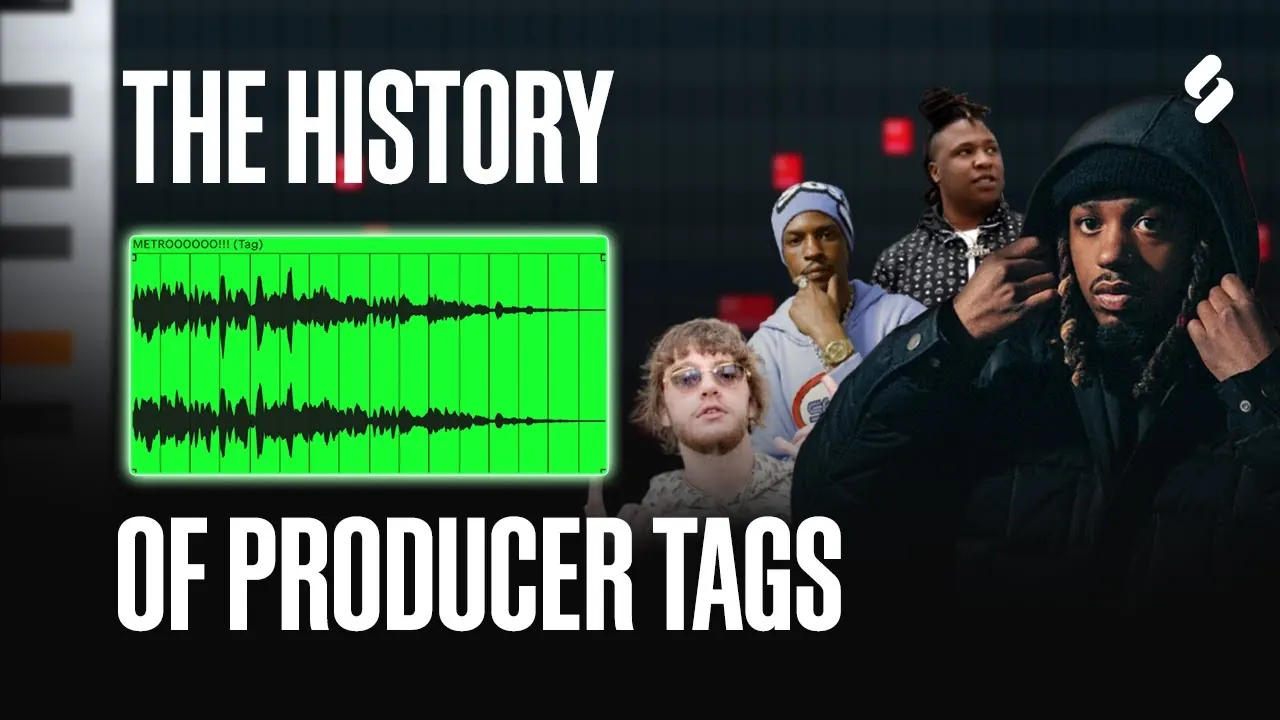
In February 2016, Kanye West filled Madison Square Garden for his Yeezy Season 3 show and played his unreleased album The Life of Pablo to roughly 20,000 people. Partway into the second song, the music dropped out for one line: “If Young Metro don’t trust you, I’m gon’ shoot you.” (play: Metro Boomin’s tag, in Future’s voice)[6]
The voice was Future’s, though he doesn’t appear on the song, which turned out to be “Father Stretch My Hands Pt. 1.” The line came from an alternate take connected to “Right Now,” a little-known Uncle Murda single. Metro Boomin, the St. Louis-born producer it vouched for, preferred that take because it was more “muted,” The FADER reported that spring.[6][14]
Metro hadn’t put a tag on the track at all. On X in 2023 he explained that West called him from the Garden before the show: “yo send the tag we about to do the show.” West then nudged it “more to the right so that the ‘shoot you’ lands on the 1.” As Metro put it, “I never would have even thought of that but that’s the genius of Kanye.”[15]
By April, Metro told The FADER, crowds were screaming the line back at him. It had already been spliced into clips from The Social Network and Taken and had turned up on a protest sign.[14]
Metro’s other famous tag, “Metro Boomin want some more,” (play: Metro Boomin’s tag, in Young Thug’s voice) is Young Thug’s voice. Tumay, Thug’s engineer, cut it from Thug’s song “Some More.” Most tags, he said, come from vocals that were already recorded rather than sessions booked for the purpose. “It just felt right to make it in the moment.”[6]
Borrowed voices
Few of the famous tags are in the producers’ own voices. Mustard’s is YG. Metro’s are Future and Young Thug. Just Blaze’s started with Cam’ron.
Pi’erre Bourne took his from television. “Yo Pi’erre, you wanna come out here?” (play: Pi’erre Bourne’s tag) is a line from The Jamie Foxx Show. It reached a much bigger audience in 2017 through his beats for Playboi Carti’s debut mixtape, including “Magnolia,” and was, in The FADER’s words, “meme-ed into oblivion.”[16]
Where a tag lands matters as much as whose voice it is. “A lot of artists hate tags,” Tumay said. “They feel like they’re distracting.” On some songs he moved the tag to the end, so it worked as “more of a closing moment than an interruption.”[6]
Some producers skip the whole thing. Psymun, a producer from Minneapolis-St. Paul, told RBMA he had never used one: “If someone is inspired by my music to create something, it’s absurd to try and deter that.”[6]
[The tag] really changed my life.
Scroll across to compare all columns.
| Tag | Producer | Voice | Where it came from |
|---|---|---|---|
| “Mustard on the beat, ho” | Mustard | YG | The end of YG’s song “I’m Good”[3] |
| “If Young Metro don’t trust you, I’m gon’ shoot you” | Metro Boomin | Future | An alternate take tied to Uncle Murda’s “Right Now”[14] |
| “Metro Boomin want some more” | Metro Boomin | Young Thug | Cut from Thug’s “Some More” by engineer Alex Tumay[6] |
| “Just Blaze” | Just Blaze | Cam’ron, later Just Blaze himself | The top of “Oh Boy”; a “Pump It Up” session[8] |
| “Yo Pi’erre, you wanna come out here?” | Pi’erre Bourne | A line from The Jamie Foxx Show | Spread through Playboi Carti’s 2017 debut mixtape[16] |
| “JYP” | J.Y. Park | Park, in a whisper | First used on a song for g.o.d[17] |
A signature in any language

The habit travels well beyond American rap. J.Y. Park, the singer and producer who founded JYP Entertainment, whispers his initials at the start of songs he writes. On the SBS talk show Healing Camp in 2012, he said he first did it on a song for the group g.o.d, liked how fans reacted and kept going, partly so people would recognize his songs even when he wasn’t performing. He called it “a sort of a fan service.”[17]
In Nigeria, Don Jazzy built “It’s Don Jazzy again!” after hearing the tag at the start of a Scott Storch production, he said on Chinasa Anukam’s podcast Is This Seat Taken? in 2022. He asked D’banj, his partner at the Mo’ Hits label, to add “again,” since the two had worked together before and Don Jazzy’s name was starting to travel.[18] He tells the story himself in the episode’s trailer.
For a later Scott Storch tag, listen to Roddy Ricch’s “Down Below” (play: Scott Storch’s tag on Roddy Ricch’s “Down Below,” voiced by Baybee T). That recording is credited to VTG vocalist Baybee T in our client reel.
Nigerian producers have since turned tags into a craft of their own. Writing for NATIVE in 2021, Dennis Ade Peter catalogued nearly two dozen, from Burna Boy stretching out Spellz’s name to Killertunes’ shouted “Shabalistica.” He also noted the limits: listeners still credited Rexxie for Naira Marley’s “Koleyewon,” even though its producer, Niphkeys, is announced in the opening seconds.[19]
What the tags that last have in common
The tags that stuck share a few habits, and anyone making one can borrow them. Just Blaze put Cam’ron’s line in the one empty spot at the top of “Oh Boy,” where nothing competed with it, and West shifted Metro’s tag until its last words landed on the one. Metro chose the more muted take of Future’s line; Mustard kept an offhand sign-off from the end of a song.
When a tag distracted from the vocal, Tumay moved it to the end of the song. And the tags crowds chant, Metro’s and Pi’erre’s among them, sound like something a person might actually say.
Few producers have YG down the hall. Many record the line themselves; others hire a voice. VoiceTagGods, which publishes this blog, sells tags recorded by human vocalists and AI voices, and you can hear its vocalists here.
For a listening session, V1T0, one of VTG’s vocalists, put together a Spotify playlist of famous producer tags.
Back to Inglewood
On June 19, 2024, six weeks after “Not Like Us” came out, Lamar staged a concert at the Kia Forum in Inglewood, the city where Mustard had lifted his tag from a YG song. Mustard played one of the two opening sets, built on his own productions, and finished it with a mini-set alongside YG, the voice inside his tag. Lamar closed the show by performing “Not Like Us” five times in a row.[20]
Just Blaze described that effect nearly two decades earlier, talking about listeners who knew his tag long before they knew who he was. “You knew the phrase,” he said, “and eventually you realized that it was me.”[8]