
“Run that back Turbo” reaches court
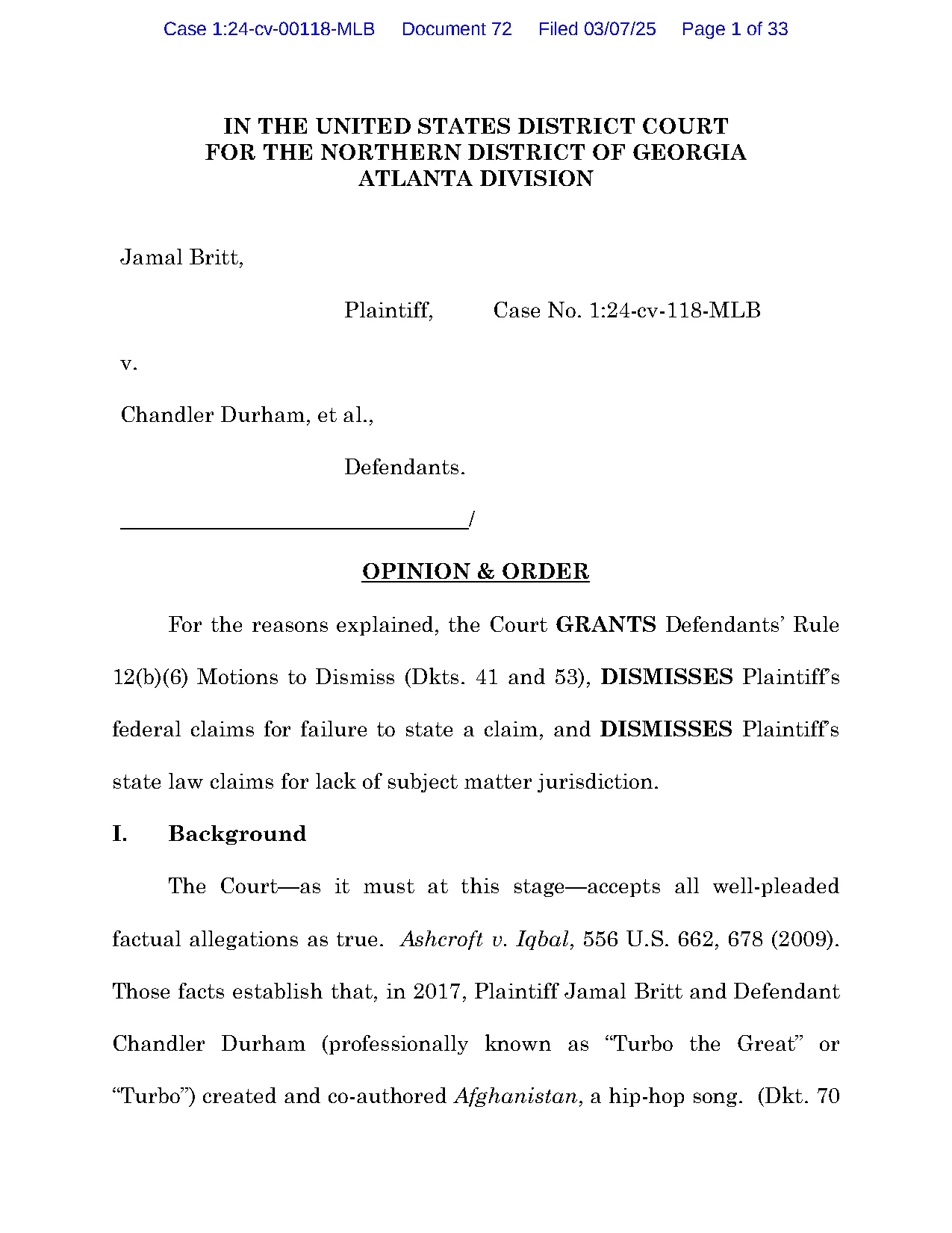
The voice saying “Run that back Turbo” (play: Turbo’s tag before the verse in Lil Baby and Gunna’s “Drip Too Hard”) became the subject of a federal case in Georgia. Jamal Britt alleged that he and producer Chandler Durham, known as Turbo, created “Afghanistan” in 2017. Britt supplied vocals, including the tag; Durham produced and engineered the recording. The song had a joint copyright registration. Britt alleged that the tag was then reused in 82 later songs without his consent or payment, including “Drip Too Hard.” These are the allegations recounted in the court’s order, not findings after a trial.[3]
Britt’s theory that he became a joint author of those later songs failed because he had not plausibly alleged the required shared intent to coauthor them. The court also explained that a co-owner can grant a nonexclusive license to a jointly owned work without the other co-owner’s permission. The alleged licensing arrangements did not support the infringement claims as pleaded. That analysis concerned this joint work and these allegations; a vocalist does not automatically become a co-owner of every song that uses a tag.[3]
On March 7, 2025, U.S. District Judge Michael L. Brown dismissed the federal claims. The claim under the Lanham Act, the federal trademark statute, was dismissed with prejudice, and the other federal claims without prejudice. He declined jurisdiction over the remaining state claims, including Georgia publicity rights. Footnote five expressly left the tag’s independent copyrightability undecided. The order therefore offers no universal answer to whether a short tag recording qualifies for copyright, or whether a voice-rights claim could succeed elsewhere.[3]
Can you copyright a producer tag?
Under U.S. federal rules, names, slogans and other short phrases are excluded from copyright. A recording is a separate work, however, and the Copyright Office looks for enough creative authorship in its performance or production. Its manual considers length alongside the sounds and the creativity expressed in making them. A short recording can fail that test. Calling the file a producer tag, or paying for it, supplies no automatic answer.[4][5]
Section 114(b) limits sound-recording copyright to the actual recorded sounds. It does not extend that right to an entirely independent recording, even one that imitates them. But that limit answers only the recording-copyright question. A borrowed identity or misleading brand signal can raise other claims. And Turbo’s case shows why registering a whole song should not be reported as a court ruling on the copyrightability of its isolated tag.[6][7][3]
Short sound recordings may lack a sufficient amount of authorship to be copyrightable
Pitbull’s shout takes the trademark route
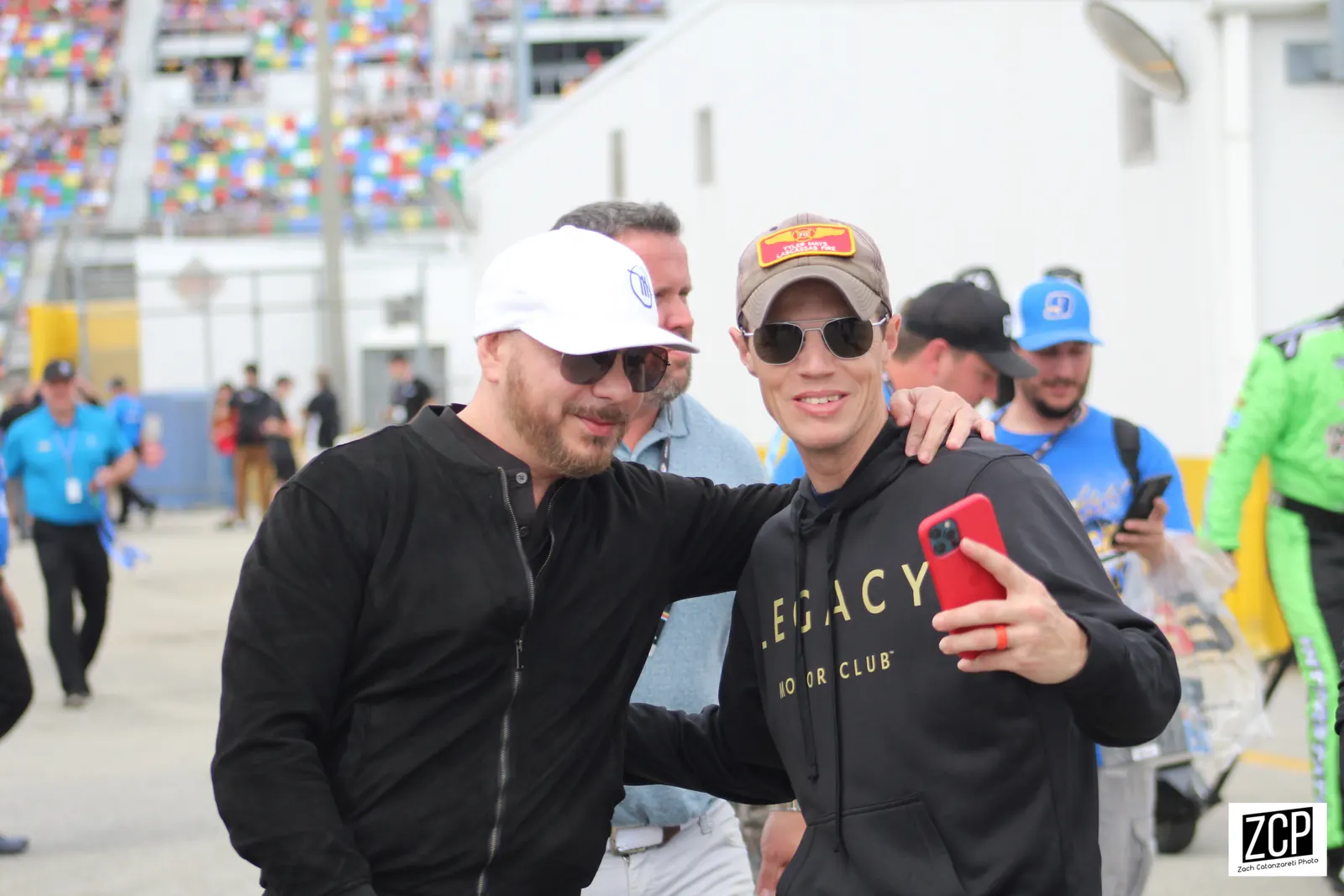
Pitbull’s falsetto yell (play: Pitbull’s signature yell in the official audio of “Timber”) went through a different process. In a 2020 journal essay co-written with his lawyers, he described the protection of his grito as a sound trademark. The essay records two registrations issued on Oct. 8, 2019: No. 5,877,076 for live musical performances and No. 5,877,077 for musical sound and video recordings. The team submitted evidence that listeners recognized the shout as identifying Pitbull.[8]
Trademark law asks whether a sign identifies and distinguishes a source of goods or services. A sound can do that job. Copyright’s exclusion of short phrases does not itself prevent a phrase or sound from functioning as a mark. Pitbull’s registrations are a concrete example of the distinction, though they do not give every producer a claim to every similar shout or mention of a name.[9][10][8]
There are limits to reaching for trademark law when the complaint is really about credit. Britt’s Lanham Act theory accused the defendants of passing his contribution off as their own. Applying the Supreme Court’s Dastar decision, the judge rejected that attempt to treat creative authorship as the origin of goods under the claim presented. Pitbull’s registration story and Britt’s failed credit claim concern different uses of the same body of law. Neither is a substitute for a clear agreement with the person who recorded a tag.[3]
A TV catchphrase is also someone’s recording
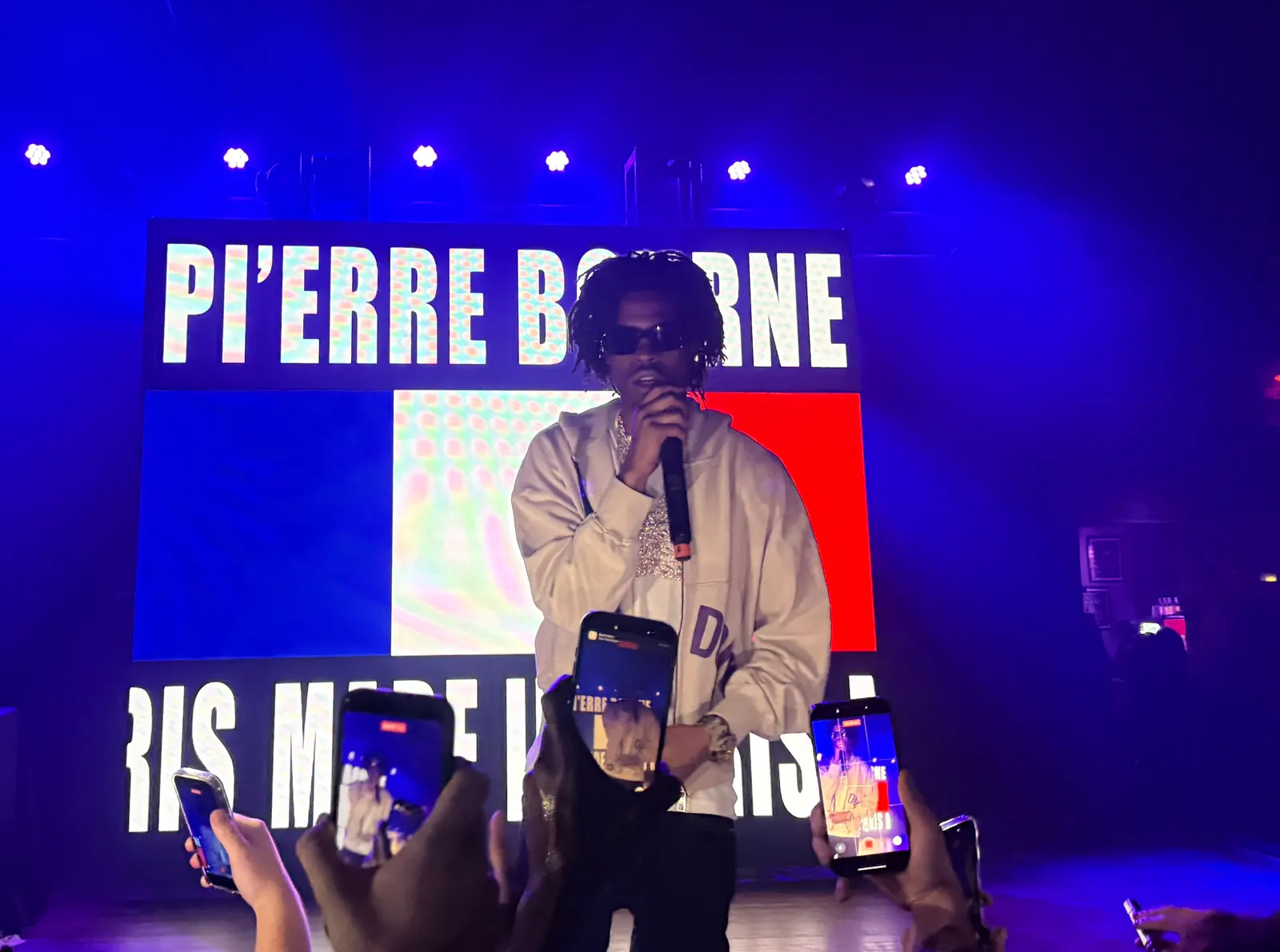
Pi’erre Bourne’s “Yo Pi’erre, you wanna come out here?” (play: The Jamie Foxx Show-derived tag opening Playboi Carti’s “Magnolia”) offers a familiar example of a borrowed screen moment becoming a producer’s signature. The FADER’s 2018 profile identifies The Jamie Foxx Show as its source. Bourne told the magazine that the tag changed his life. In a 2021 Complex appearance, he discussed seeing the show and wanting to meet Jamie Foxx. Neither interview establishes the terms of any clearance, and this feature makes no claim about whether that particular use was licensed.[11][12]
For someone considering a movie or TV quote, the original performance is part of the rights question. U.S. law includes a film’s accompanying sounds within its audiovisual work and excludes those sounds from the separate definition of a sound recording. An answer limited to music-master rights can therefore miss the work being copied. Fair use requires weighing the statutory factors in the circumstances; section 107 sets no blanket allowance for a clip under a particular number of seconds.[13][14]
AI voices and rights
A voice is as distinctive and personal as a face.
Permission to sell an AI-generated tag and copyright in that tag are separate matters. In its January 2025 report announcement, the U.S. Copyright Office said that prompts alone do not provide the human authorship needed for protection. Human expression preserved in an output, or sufficiently creative human arrangements or modifications, can qualify. Using AI in a larger human work does not disqualify the whole work. None of that promises a copyright in every generated voice line or in every file with added effects.[15]
The tool’s agreement answers a different question. ElevenLabs’ non-EEA terms, checked Oct. 16, 2026, permit commercial use for paid subscribers and restrict free users to noncommercial purposes, subject to its other terms. Its use policy separately restricts cloning or synthesizing a living person’s voice without informed consent or other valid authorization. Read the plan and regional terms that govern your own generation. A provider’s commercial-use permission cannot settle someone else’s claim to their identity.[16][17]
After Bette Midler declined to sing in a Ford advertisement, an agency hired a singer to imitate her. Although the song was licensed, the Ninth Circuit held in 1988 that deliberate commercial imitation of a distinctive, widely known professional singer’s voice could support a California common-law claim. It reversed summary judgment and sent the case back for trial. Midler v. Ford concerned advertising, long before AI voice cloning. Its relevance here is the separate identity issue that can survive when recording copyright does not answer the complaint.[7]
What to settle before the next release
For a producer commissioning a new voice, the useful paperwork starts with what the agreement actually permits. Does it cover reuse across future beats and releases? Can customers distribute music containing it? Is the recording exclusive, and does the agreement address the performer’s voice and attribution? Those are different promises. Under U.S. copyright law, an ownership transfer generally requires a signed writing; a license to use a file is not automatically a transfer of the copyright.[13][18]
If you want to use someone else’s existing tag, establish who can authorize the recording and what permission covers. A recognizable brand signal or someone’s identifiable voice may call for a separate inquiry. The Turbo order distinguishes joint ownership and licensing from credit, while leaving state publicity rights unresolved. For a screen sample, identify the work the audio came from. For a generated imitation, establish whose voice is being used and what authorization covers it.[3][7][13][14]
The proposed contract described in De La Cruz Hernández’s case reached backward to earlier releases and forward to future uses. By the time the dispute reached Puerto Rico’s Supreme Court in July 2026, the recording alleged in the complaint was more than a decade old. The court returned the surviving claims to the trial court, where the disagreement over using her voice could continue.[2]